
October 20, 2026
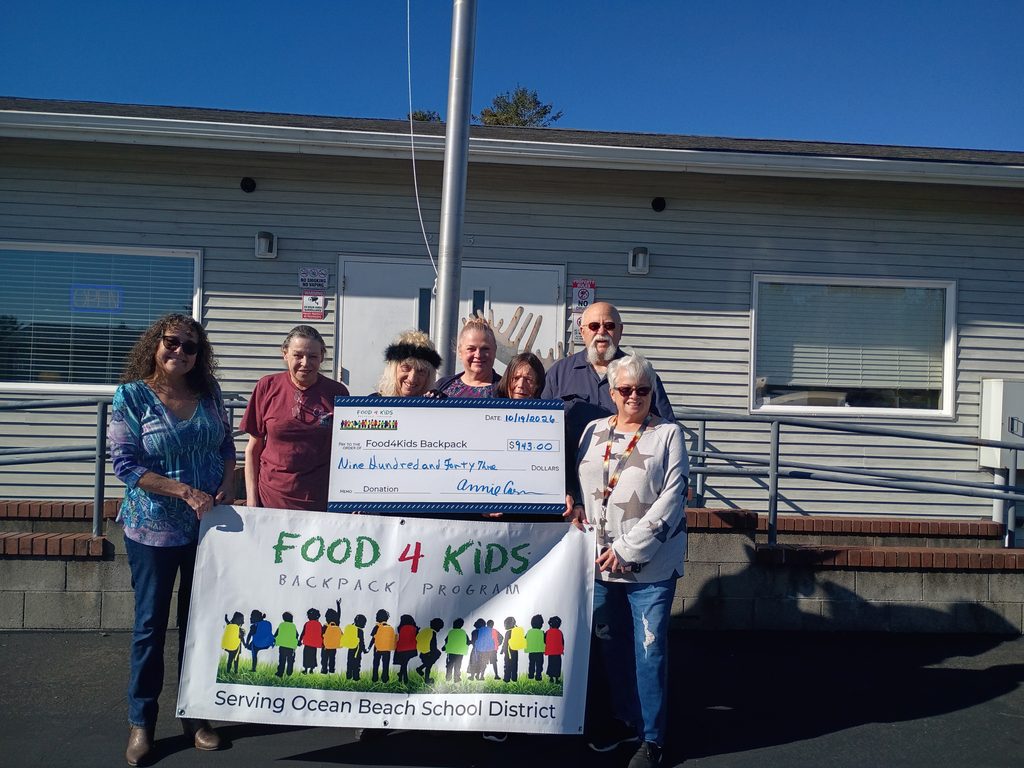
And the Moose Lodge comes through for Food 4 Kids once again with a dessert raffle that was a lot of fun. We really enjoy partnering with the Moose Lodge!
Food4Kids is the happy recipient of the proceeds from the golf challenge sponsored by our local
Moose Lodge #2362. Thank you so much for the donation, and for the opportunity to work with you.
October 7th, 2026
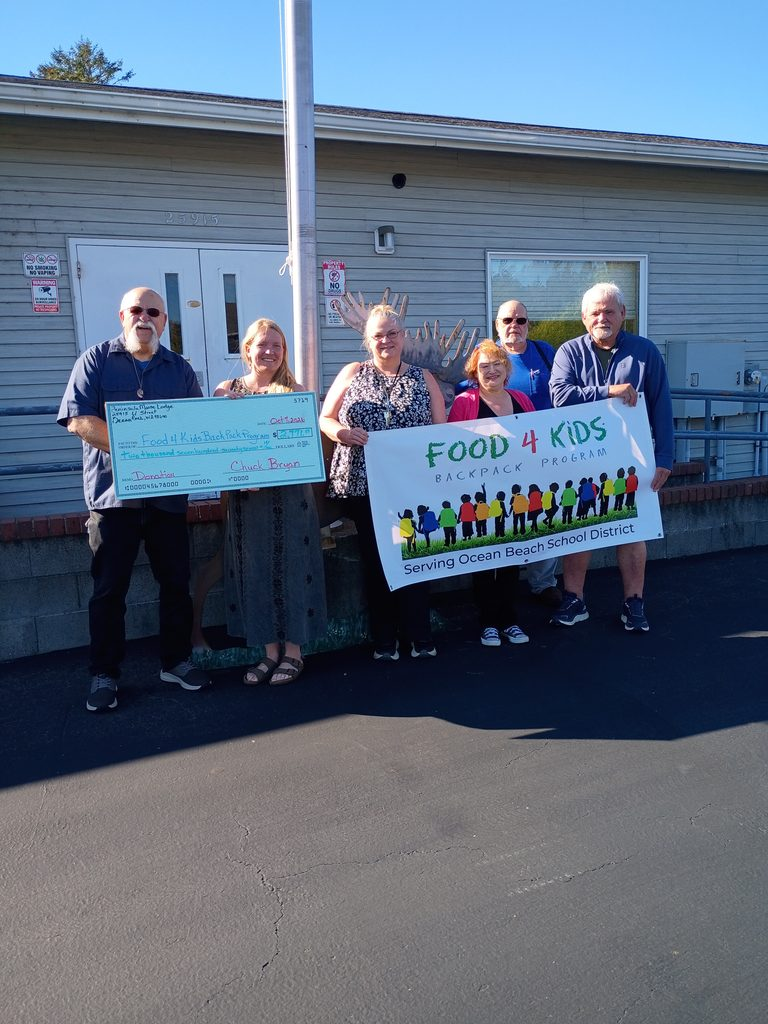
What a great bunch of people!

This was such an awesome event. What could be better? A great evening in a smaller, intimate
situation listening to great music performed by a great musical group with great friends. Our thanks to the Svensens for the use of
their space. Big thank-yous to everyone concerned, including our very own Lori for being the main contact and set-up person.

| View this email in your browser |
 |
| 2026 Giving Catalog—for Participants:Rules of the RoadThank you for participating in the PCF Giving Catalog this year. With several new members, here’s a recap of the process and details about weekly bonuses, checks, and other topics. Giving Catalogs work well when every participant organization has their board and members reach out to friends, family and donors. Weekly messaging helps remind people that this is still underway. At our end, we see this clearly with requests that receive a steady stream of donations all month long. PCF pays the credit card fees and waives admin fees for donations to the Giving Catalog. This means every dollar donated to your organization through the catalog goes to you. We have a “Give To All” option for donors who prefer one payment at one spot rather than selecting among almost 30 choices. This simplifies the selection process, and PCF does the math. Last year, GTA gave over $550 to each participant organization. This will be added to your request total after the catalog closes. This year, PCF board decided that to be eligible for “Give To All” funds, your request must get some donations. If your request receives direct donations, you will also get a GTA portion. Bonuses will go to top fundraisers each week, $500 per bonus, one per week, and one per organization. Weeks end on Sunday nights: October 11, 18, 25 and then Saturday, October 31. [Add the first 4 days of October into the next week, ending October 10th.] These bonuses will be added to those grant requests after the catalog closes. We watch the donation total for each request day by day. As requests approach their limits, we bump up the asking amount to keep that request live. If you know your request will get a large donation, please contact us so that we can make sure your asking amount is above that donation amount. The last thing any of us want is for a donation to bounce because your request limit was reached too quickly! Checks are issued after November 1st, as soon as we apportion out bonuses and GTA portions. We have an AHC option and can send checks directly to your account. If you want to use ACH, please contact PCF for a form, to confirm you want us to use this method. Otherwise, you will get a check, either by hand or mail. We do prefer not to mail checks—they often go astray in the mail. Hand to hand is much better! Contact PCF with any questions, info@spccf.org, 360-665-5292 |

What a wonderful way to end the year! We are so fortunate to have so many committed people who make Food4Kids actually come together and work in ways that benefit the kids for the whole school year. Many thanks to the Board Members and the close allies who try to ensure that we put together a good program that serves our community. A special thanks to the Lions Club, which donated $2000 at our year’s closing to help us start up next year’s program. Without this type of community support, we could not function.
THANK YOU FRIENDS, FOR ALL YOU DO!

We are thrilled to share the wonderful news that this year’s Empty Bowls Fundraiser raised a total of $7,200 — our most successful event to date. This incredible achievement reflects the generosity, creativity, and compassion of our entire community. The event was hosted again by the Family Worship Center-Ocean Park, WA. We are so grateful for your continued support.
Huge thanks to the incredible artists of Bay Avenue Gallery for creating and donating beautiful handcrafted bowls, and to all the talented local artists who contributed their artwork to our silent auction. Your support and donations made this event very successful.
A special thank you goes to the restaurants who donated soup, chowder, and bread, helping us offer a warm, welcoming meal that brought everyone together. A very special thank you goes to Chef Kevin from B & D’s Food Hut, who was the heart of the kitchen and kept everything running smoothly.
Because of each of you — artists, restaurants, volunteers, and attendees — we are able to continue supporting families in our community.


Many thanks once again to the ladies of the Lions Club, who once again came to our rescue and pitched in to make this a successful fund raiser.
WE OWE YOU!


10/02/2025
Another very generous donation to Food 4 Kids from our new friends at the Peninsula Lions Club. We so much appreciate your generosity and your willingness to help us keep the kids fed on the weekends. The generosity of individuals and groups on the peninsula continues to amaze us.
We are also very appreciative of your willingness to help pack the lunches. Thank You so much.
Tuba Christmas


Our thanks go out to the Christmas Tuba Quartet who made this donation to Food4Kids possible!
Merry Christmas
Food Systems, Nutrition, and Health
School of Public Health
The growing struggle to afford groceries in Washington State
February 13, 2025 | Daniel Shafer

New Washington State Food Security Survey shows high food insecurity, with grocery prices a top concern
Groceries were the most common expense reported as hard to afford in the past month, followed by housing, according to the latest WAFOOD survey. Rising food prices and the expiration of pandemic-era assistance programs have intensified economic pressures on households statewide.
The Washington State Food Security Surveys (WAFOOD) are an effort led by the University of Washington and Washington State University, supported in part by WSDA. Since 2020, the WAFOOD surveys have provided key insights into food insecurity trends and food assistance use to inform policy and collaborative strategies.
“Too many Washingtonians are struggling with food insecurity and the high cost of food. The federal government’s policies risk making the problem worse. That’s why I worked to stop a merger of grocer giants that would have raised prices. And its why I’m working with the Legislature to ensure that every student in K-12 schools has access to free meals. We must center the people, address food prices, and protect critical access to food assistance,” said Washington State Governor Bob Ferguson.
Results from the survey’s fifth wave, or WAFOOD 5, conducted from August to October 2024, show that the impacts of food insecurity were felt unevenly. For example, food insecurity was more common among households with children; larger households; lower income households; and households with Black, American Indian/Alaskan Native and multi-racial respondents.
Survey Key Findings
- 78% of those surveyed felt that prices increased in the past month, and 82% were worried about future price increases.
- 70% of food insecure respondents reported reducing their food quantity and quality due to high costs.
- Among the 55% of surveyed respondents who used food assistance in the past month, individuals used a variety of programs tailored to different life stages and needs, with food banks/pantries, SNAP and school meals among the most-used programs.
- Stress, anxiety and depression were more common among food insecure households, with 84% of food-insecure households reporting high stress.

How food insecurity impacts health
“Food insecurity is when families can’t consistently access or afford the food they need,” said Dr. Jennifer Otten, professor in the UW Department of Environmental & Occupational Health Sciences and Food Systems, Nutrition, and Health program. “Lack of access to nutritious food and not knowing where your next meal will come from — we know this leads to a range of negative health consequences. Food insecurity can lead to increased chronic disease risk, as well as long-term cognitive deficits in children and mental health challenges, including greater stress, anxiety and depression.”
Dr. Marie Spiker, assistant professor in the UW Department of Epidemiology, emphasized the value of state-specific data. “The WAFOOD surveys allow us to see who is struggling the most and how economic pressures impact food spending, mental health and diet quality,” she said. “Among our 5,528 survey respondents, a third of households earning $75,000–$150,000 reported food insecurity, highlighting the challenge for families not eligible for federal assistance.”
Food Insecurity Climbs in Washington and Beyond
Food insecurity has been rising nationwide since 2021, with 9.5% of Washingtonians classified as food insecure in 2023, according to USDA reports. Temporary emergency allotments to the Supplemental Nutrition Assistance Program (SNAP) enacted during the COVID-19 pandemic ended in March 2023, further straining household budgets.

Results from WAFOOD 5 included 5,528 respondents from all counties in the state. In this wave and all prior waves, the WAFOOD survey intentionally oversamples households with lower incomes and those using food assistance to provide deeper insights into food insecurity throughout the state.
“This latest data confirms what our hunger relief partners across the state have been telling us. A growing number of Washingtonians are impacted by food insecurity and are worried about their ability to afford food,” said Katie Rains, food policy advisor at WSDA. “WSDA continues to support this important research because food is important to everybody. We all have to eat, and we’re in this together. By making this information broadly available to policymakers and community organizations, we hope to foster a shared understanding and collaborative strategies to address food insecurity and feed people well in our state in the years ahead.”
Additional information and past WAFOOD findings are available on the UW WAFOOD project page.
Daniel Schafer is a communications administrator for WSDA.
February 13, 2025